Derived Waveforms
Derived waveforms are waveforms whose values are computed from other waveforms. These computations may involve mathematical expressions or NumPy functions. Whenever a source waveform is changed, any waveform that depends on it is automatically recalculated in the GUI.
Examples
Dividing Total Power Among Multiple Beams
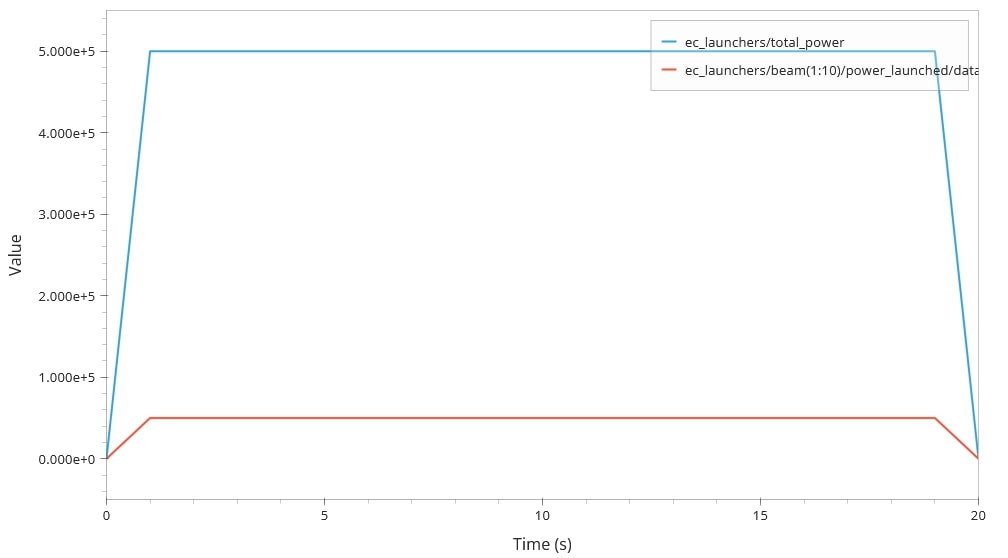
This example demonstrates how to distribute a total power value across multiple beams.
The total_power waveform defines the overall power profile over time.
The power of the individual beams are scaled by the total power to ensure the power of
all beams combined is equal to the total power.
ec_launchers:
  ec_launchers/total_power:
  - {duration: 1}
  - {type: constant, value: 5e+5, duration: 18}
  - {to: 0}
  ec_launchers/beam(1:10)/power_launched/data: |
    'ec_launchers/total_power' / 10
Warning
In this example case, the editor does not validate whether the sum of all ec_launchers/beam*/power_launched values matches ec_launchers/total_power.
Arithmetic on a Single Waveform
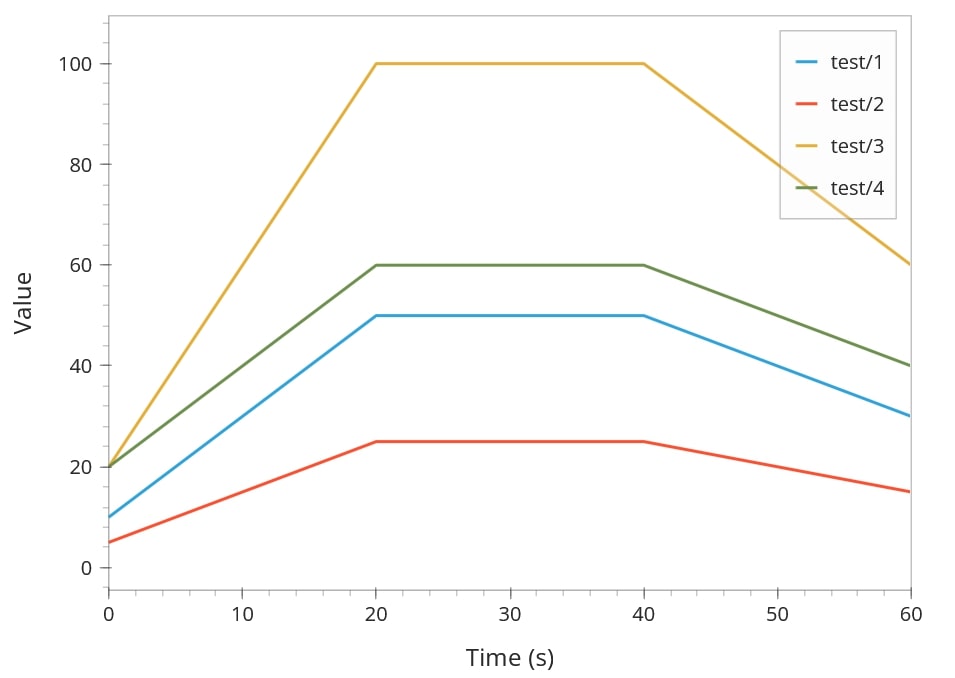
This example shows how to perform arithmetic on a waveform. It features a simple waveform,
test/1, which consists of a ramp-up, flat top, and ramp-down.
The other waveforms are derived from test/1 and apply different mathematical expressions:
test/2 divides test/1 by 2, test/3 multiplies it by 2, and test/4 adds a constant offset.
example:
  test/1:
  - {type: linear, from: 10, to: 50, duration: 20}
  - {type: constant, value: 50, duration: 20}
  - {type: linear, from: 50, to: 30, duration: 20}
  test/2: |
    'test/1' / 2
  test/3: |
    2 * 'test/1'
  test/4: |
    'test/1' + 10
Note
If you are using the Waveform Editor from the GUI, you only have to enter the
expression in the block string. For the example above, you would only need
to enter 'test/1' + 10 as the waveform definition for the waveform test/4.
Multiple Dependencies
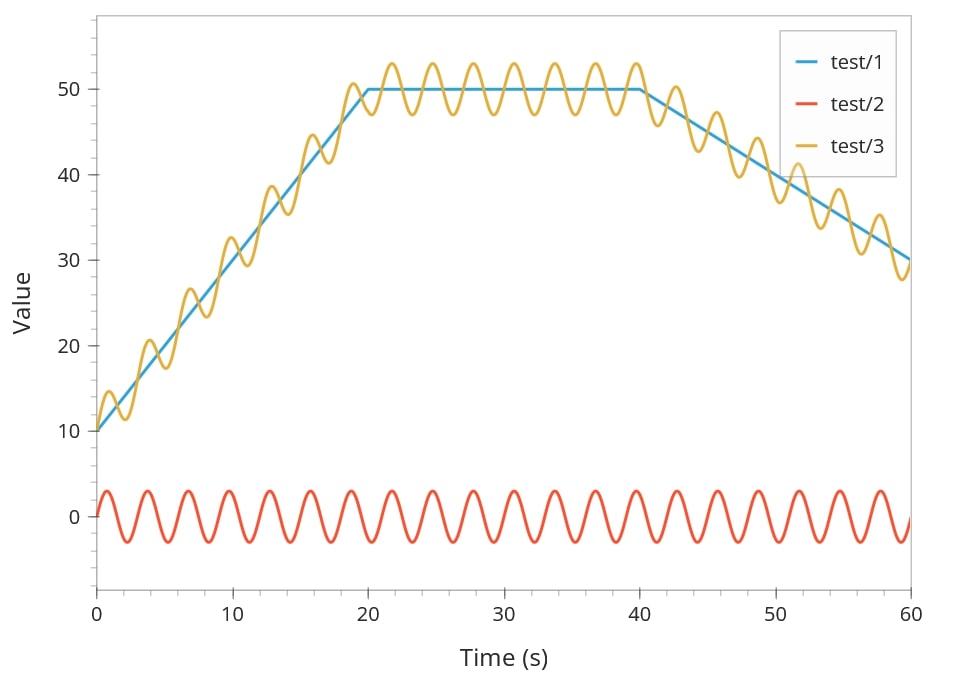
It is allowed to use multiple different dependent waveforms in a single expression.
In the example below, waveform test/3 is the sum of the waveforms test/1 and test/2.
example:
  test/1:
  - {type: linear, from: 10, to: 50, duration: 20}
  - {type: constant, value: 50, duration: 20}
  - {type: linear, from: 50, to: 30, duration: 20}
  test/2:
  - {type: sine, amplitude: 3, period: 3, duration: 60}
  test/3: |
    'test/1' + 'test/2'
Using NumPy Functions
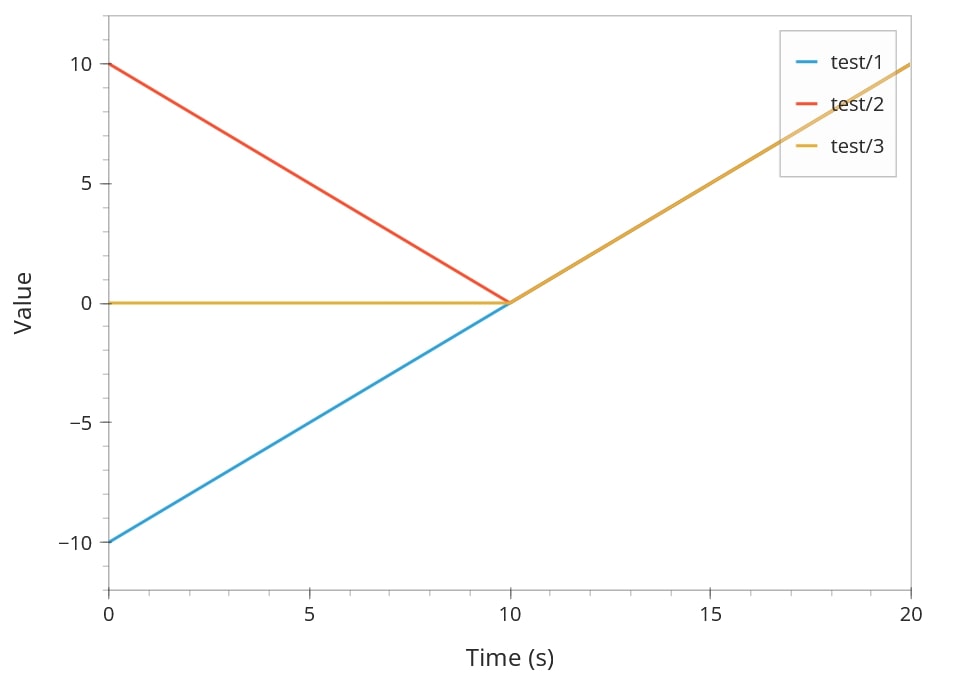
It is allowed to use NumPy expressions to transform existing waveforms.
This example demonstrates how to use different NumPy functions in derived waveform expressions.
test/2 applies the absolute value, and test/3 clamps the waveform to non-negative values using maximum.
example:
  test/1:
  - {type: linear, from: -10, to: 10, duration: 20}
  test/2: |
    abs('test/1')
  test/3: |
    maximum('test/1', 0)
Note
Only NumPy’s universal functions (ufuncs) are allowed in expressions. See the NumPy ufunc documentation for the full list.
Combined Operations
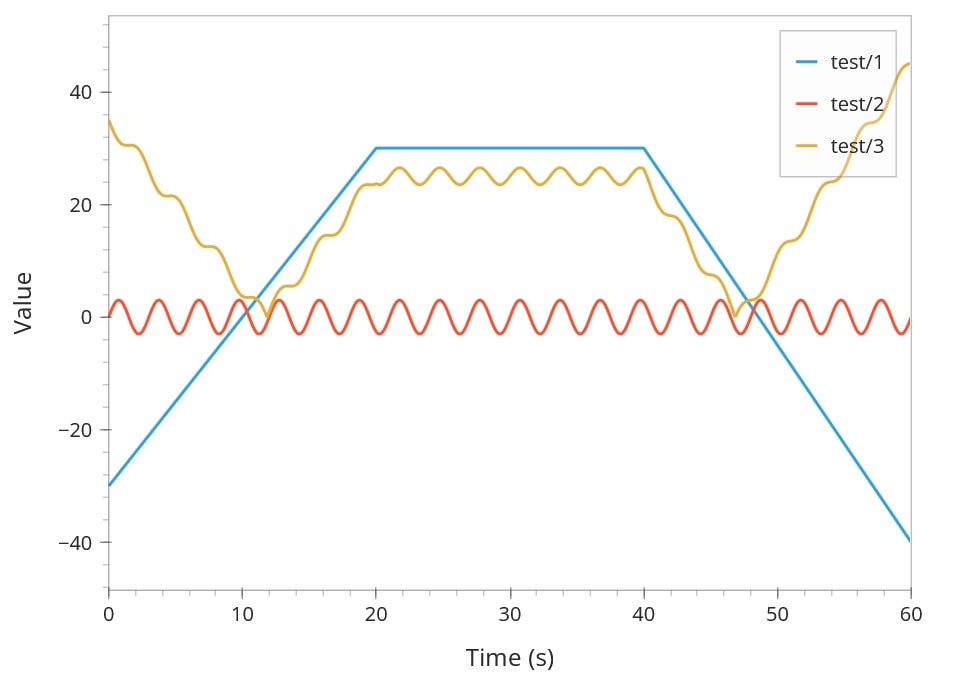
The methods explained above may be combined to generate complex waveform definitions, an example of this is shown below.
example:
  test/1:
  - {from: -30, to: 30, duration: 20}
  - {duration: 20}
  - {to: -40, duration: 20}
  test/2:
  - {type: sine, amplitude: 3, period: 3, duration: 60}
  test/3: |
    abs('test/1' - 5 + 'test/2' / 2)